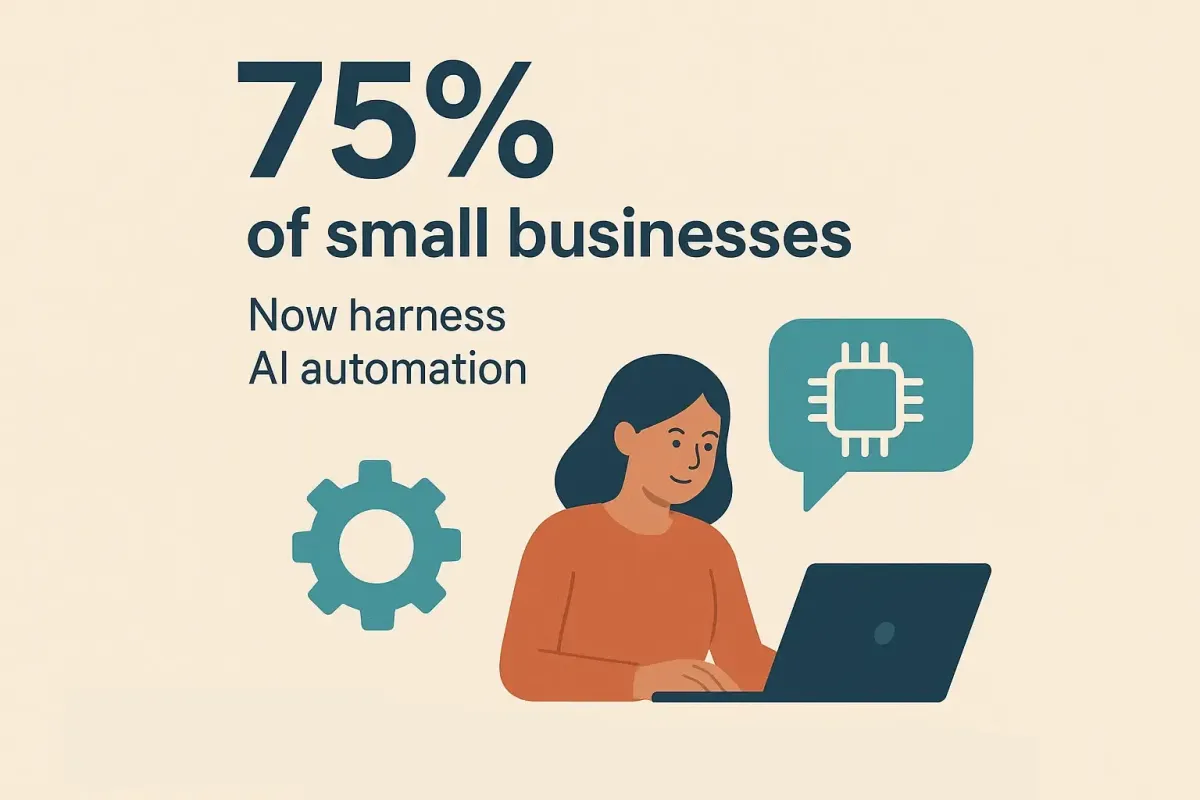
AI Automation for Small Business: The Ultimate Guide to Streamlined Operations
Small business owners face a constant challenge: doing more with less. Enter ai automation for small business – a game-changing approach that's transforming how small companies operate, compete, and grow in today's fast-paced market.
AI automation isn't just for tech giants anymore. It's becoming essential for small businesses wanting to reduce repetitive tasks, cut operational costs, and boost efficiency without breaking the bank. By automating routine workflows, small business owners can focus on what matters most: growing their business and serving customers better.
This comprehensive small business automation guide will walk you through everything you need to know. We'll explore what AI automation means for your business, reveal its key benefits, provide step-by-step implementation guidance, showcase real-world ai workflow examples, and give you actionable steps to get started today.
Understanding AI Automation for Small Business
AI automation for small business refers to using artificial intelligence tools and algorithms to automate workflows and routine tasks. This includes everything from inventory management and appointment scheduling to customer service and data analysis.
Unlike traditional automation that follows rigid rules, AI automation learns and adapts. It can handle complex tasks like understanding customer inquiries, predicting inventory needs, or analyzing sales patterns to make smart recommendations.
For small businesses, this technology offers unprecedented opportunities. AI automation allows businesses to accomplish more with fewer resources, streamline manual processes that eat up valuable time, and free up owners and staff to focus on strategic initiatives rather than repetitive work.
The relevance of how ai helps small business becomes clear when you consider the daily challenges most small business owners face. Manual data entry, scheduling conflicts, inventory tracking, customer inquiries – these tasks consume hours that could be spent on business development, customer relationship building, or innovation.
Benefits of AI Automation
The benefits of ai automation for small businesses are both immediate and long-lasting. Let's examine the key advantages that make this technology so compelling:
Reduced Operational Costs
Automating repetitive tasks leads to direct labor savings and reduces operational costs significantly. Research shows that businesses can achieve cost reductions of up to 70% in specific processes like inventory management.
For example, a small retail store that previously spent 10 hours weekly on manual inventory counting can reduce this to 2 hours with AI-powered inventory tracking systems. This time savings translates directly to cost savings or allows staff to focus on customer service and sales activities.
Increased Productivity and Efficiency
AI automation can increase productivity by up to 40% by speeding up routine tasks such as document drafting, scheduling, and data entry. Tasks that once took hours can be completed in minutes.
Consider a small accounting firm that uses AI to automatically categorize expenses and generate basic reports. What previously required a full day of manual work can now be accomplished in under an hour, allowing the firm to serve more clients or provide deeper analysis services.
Improved Customer Engagement
AI-powered chatbots and personalization tools offer 24/7 support (source) and tailored recommendations, boosting customer satisfaction and loyalty. Customers receive instant responses to common questions, even outside business hours.
A small e-commerce business using AI chatbots can handle basic customer inquiries, process simple orders, and provide product recommendations around the clock. This level of service was previously only available to businesses with large customer service teams.
Enhanced Accuracy and Decision-Making
AI tools reduce human errors and use data-driven insights for better business decisions. Instead of relying on gut feelings or limited data, small business owners can make informed decisions based on comprehensive analysis.
For instance, AI can analyze sales patterns, seasonal trends, and customer behavior to predict demand, helping businesses optimize inventory levels and avoid costly overstocking or stockout.
Scalability Without Proportional Cost Increases
Perhaps most importantly, AI automation enables businesses to grow without linear increases in costs or staff requirements. As order volume increases, automated systems can handle the additional workload without requiring proportional increases in human resources.
Small Business Automation Guide
Implementing ai automation for small business doesn't have to be overwhelming. Follow this step-by-step small business automation guide to ensure successful adoption:
Step 1: Assess Needs and Set Goals
Begin by identifying repetitive tasks or pain points in your business that could benefit from automation. Are you looking to reduce costs, improve efficiency, enhance customer experience, or free up time for strategic work? Having specific goals helps you measure success and choose the right tools.
Create a list of your most time-consuming manual tasks and estimate how many hours per week each requires. This assessment will help you prioritize which processes to automate first and calculate potential time savings.
Step 2: Research and Select Appropriate AI Tools
Choose tools that fit your business needs and integrate with existing systems. Consider factors like user-friendliness, affordability, scalability, and customer support quality.
Look for solutions that offer free trials or freemium versions so you can test functionality before committing. Popular categories of AI tools for small businesses include customer relationship management (CRM) systems, chatbots, inventory management platforms, scheduling software, and marketing automation tools.
Research vendor reputation, read user reviews, and check integration capabilities with your current software stack. The best AI tool is one that seamlessly fits into your existing workflows rather than requiring complete system overhauls.
Step 3: Pilot Projects and Testing
Start with one or two pilot projects to minimize risk and gather performance feedback. Choose processes that are well-defined, have clear success metrics, and won't disrupt core business operations if issues arise.
During the pilot phase, monitor key performance indicators closely. Track metrics like time saved, error reduction, customer satisfaction scores, or cost savings. Document both successes and challenges to inform your scaling decisions.
Gather feedback from employees who interact with the automated systems daily. Their insights are invaluable for identifying improvement opportunities and ensuring smooth adoption.
Step 4: Scale and Optimize
Based on pilot results, gradually automate additional processes. Successful automation in one area often reveals opportunities in related processes.
Continuously optimize workflows for maximum efficiency. AI systems improve over time as they process more data, so regularly review performance and adjust settings as needed.
Consider the interconnections between different automated processes. For example, automated inventory management can trigger automated reordering, which can update financial forecasting systems.
Step 5: Train Staff and Foster Adoption
Provide comprehensive training to help staff adapt to new tools. Address concerns about job security by explaining how automation eliminates tedious tasks and creates opportunities for more meaningful work.
Focus training on how AI enhances rather than replaces human capabilities. Emphasize that automation handles routine tasks so employees can focus on creative problem-solving, customer relationships, and strategic thinking.
Create documentation and provide ongoing support as employees adapt to new workflows. Consider appointing automation champions within your team to provide peer support and feedback.
Common Challenges and Solutions
Lack of Expertise: Partner with vendors offering onboarding support or work with AI consultants who specialize in small business implementations. If you need more comprehensive AI readiness steps and adoption roadmaps, consider reading this guide. Many AI platforms now offer guided setup processes and dedicated customer success teams.
Budget Concerns: Start with basic, affordable tools rather than comprehensive enterprise solutions. Many AI platforms now offer pricing tiers designed for small businesses, including pay-as-you-use models that scale with your business.
Data Privacy: Ensure all AI systems comply with data protection regulations.